
Standard
For one child
£39a month
or £390 a year, which saves £78
- Every SATs Academy lesson, practice set and test
- All 71 full mock papers
- Parent progress view with mock score trends
7-day free trial. Cancel before day 7 and you won't be charged.
SATs Academy
Reading and maths aren't just school subjects. They're the foundations of independence. And foundations are easier to build before the weight above them grows.
7-day free trial. Cancel before day 7 and you won't be charged.
Give them the tools to tackle what they find difficult. Structured lessons, targeted practice and full SATs mock papers. So they can build the skills, and you can see the progress.
Start here: watch the 3-minute film
What most parents don't know about SATs
Here is the chain, step by step. Each statistic links to its source.
Step 1 · The skills
Reading, maths, and grammar, punctuation and spelling. Every other subject runs on them. So do most jobs.
Nearly 1 in 2
In 2011, nearly half of adults in England aged 16 to 65 had maths skills no higher than those expected at age 9 to 11.
BIS, Skills for Life Survey 2011Think about that. In 2011, about 8 million adults in England had maths skills below the level expected at age 9 to 11. The survey says that can mean they may not be able to understand price labels or pay household bills.
This is not an argument for obsessing over test scores. It is an argument for taking basic maths seriously.
The national curriculum calls maths "a precondition of success across the national curriculum" and English "an essential foundation for success in all subjects".
Step 2 · Age 11
One SATs result doesn't decide a child's future. The problem is that a gap at 11 is often still there at 16.
In Year 6, children sit tests in reading, maths, and grammar, punctuation and spelling. Each test can be scored from 80 to 120. A score of 100 or more means the expected standard.
Step 3 · Age 16
Out of every 20 children, how many got grade 4 or above in both English and maths:
DfE, Key stage 4 performance. Pupils who sat SATs in 2019 (GCSEs in 2024), by average reading and maths score. A link, not a cause.
Step 4 · Harder to fix later
Of young people without a level 2 pass (broadly grade 4) in English language and/or maths at 16, 8 in 10 had still not got one or both by 19. For most, three more years did not close it.
Back to Year 6
Research for the Education Endowment Foundation found that 44% of the GCSE gap between disadvantaged pupils and their peers already exists by age 11. Year 6 SATs are the last national check before secondary school.
DfE, Level 2 and 3 attainment by young people aged 19, 2024/25
Step 5 · You
But you can decide whether they face their difficulties now, while the stakes are small, or later, when they cost more to overcome.
The Education Endowment Foundation found that effective parental engagement approaches can add an average of four months' progress over a year.
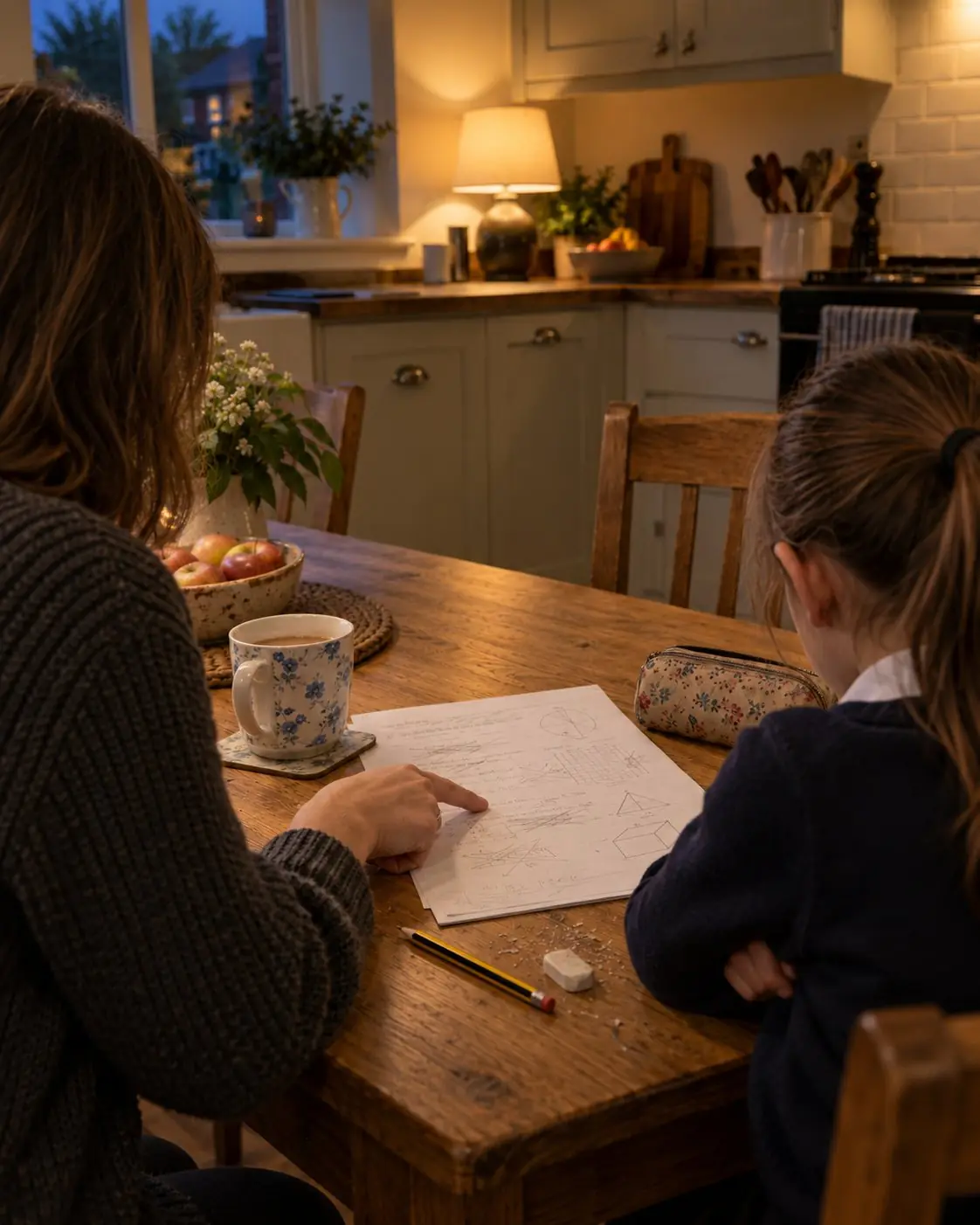
You don't know where to start, or which topics they're stuck on.
After a long day there's tea to make, and the others need you too.
Attention is in short supply, theirs and yours.
And when you do sit down, practice turns into an argument.
There's more to SATs than you thought. Nobody can be expected to teach all of it, so SATs Academy teaches every topic for you, step by step.
You are not alone in this. The Education Endowment Foundation notes that parents “have differing levels of confidence around supporting their children's learning”.
You don't need to know the method. There's nothing to plan either: their SATs Academy page names the next lesson, on a laptop or a phone.
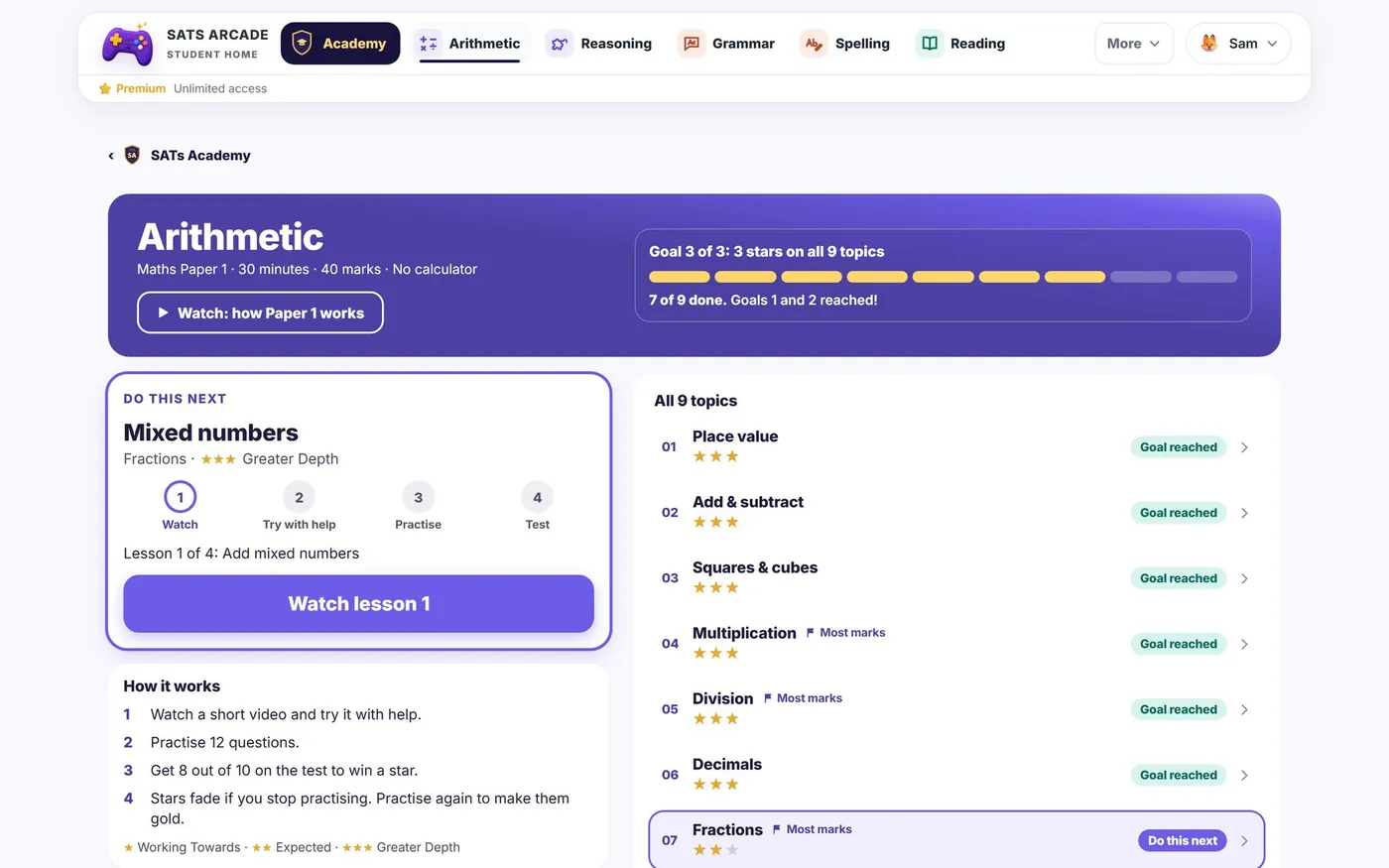
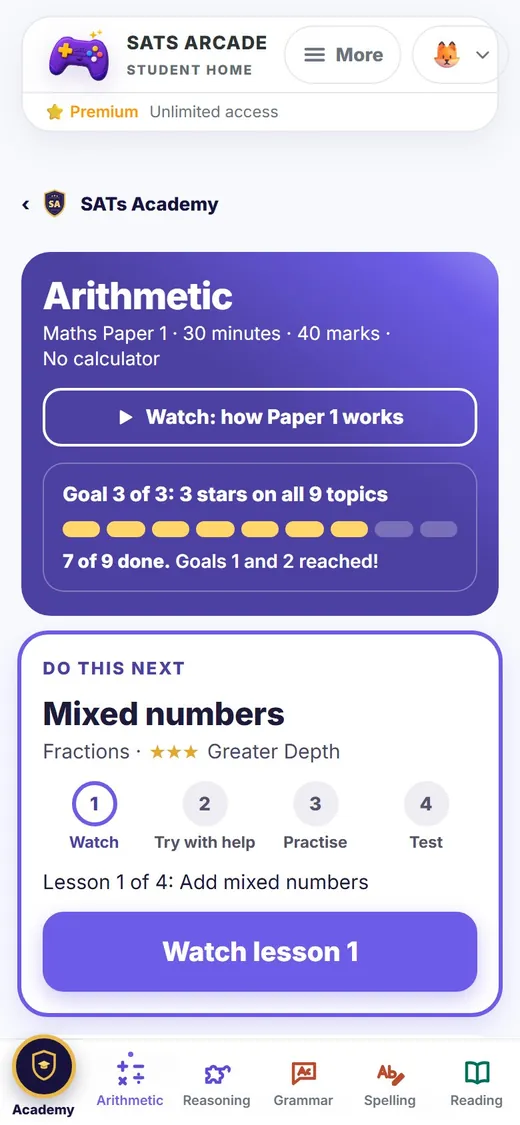
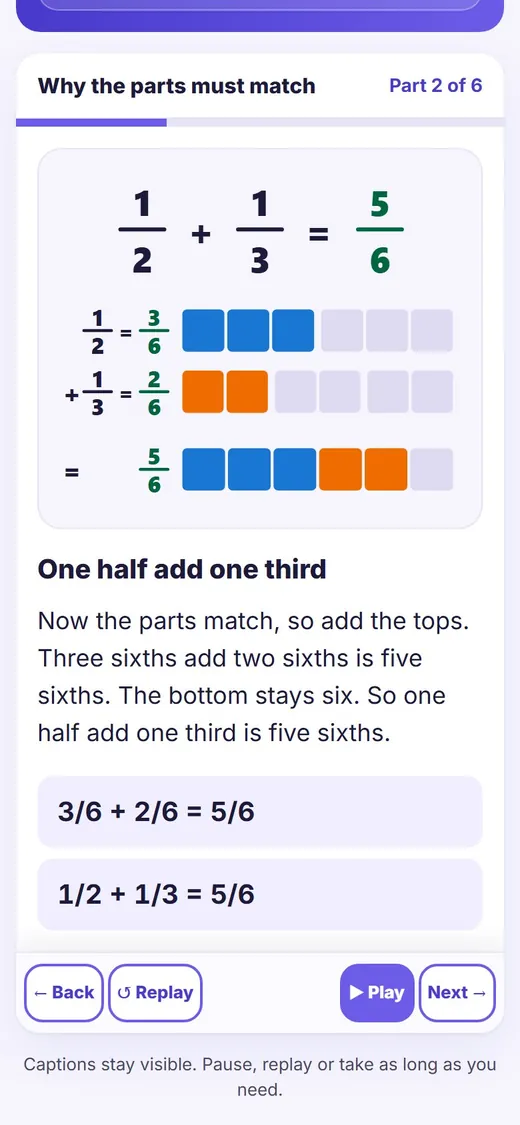
A real lesson, Fractions
A voiced lesson shows them how, with captions, pause and replay. The explaining isn't down to you.
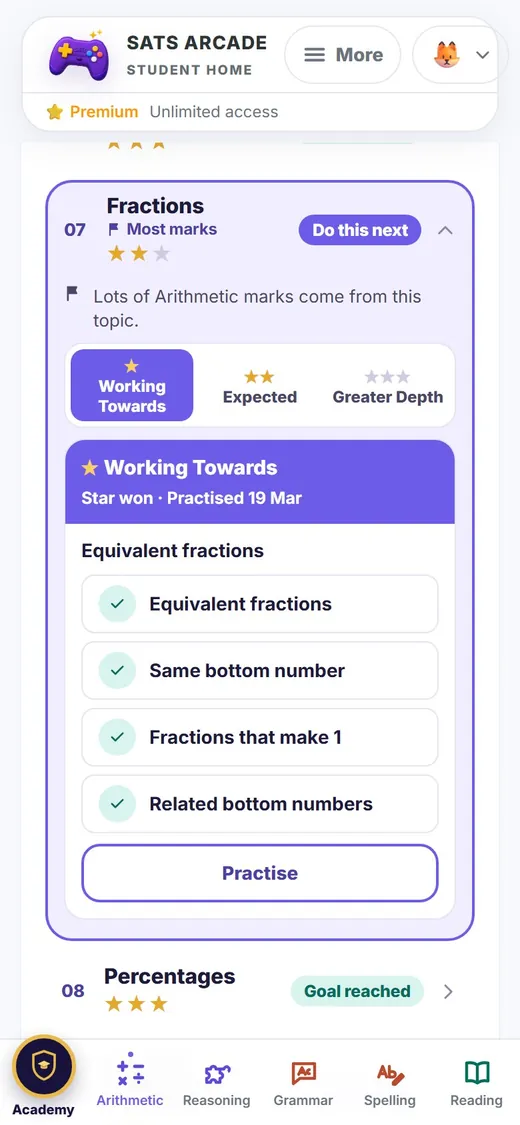
Example progress
Questions on just that topic, so they do it themselves while the method is fresh.
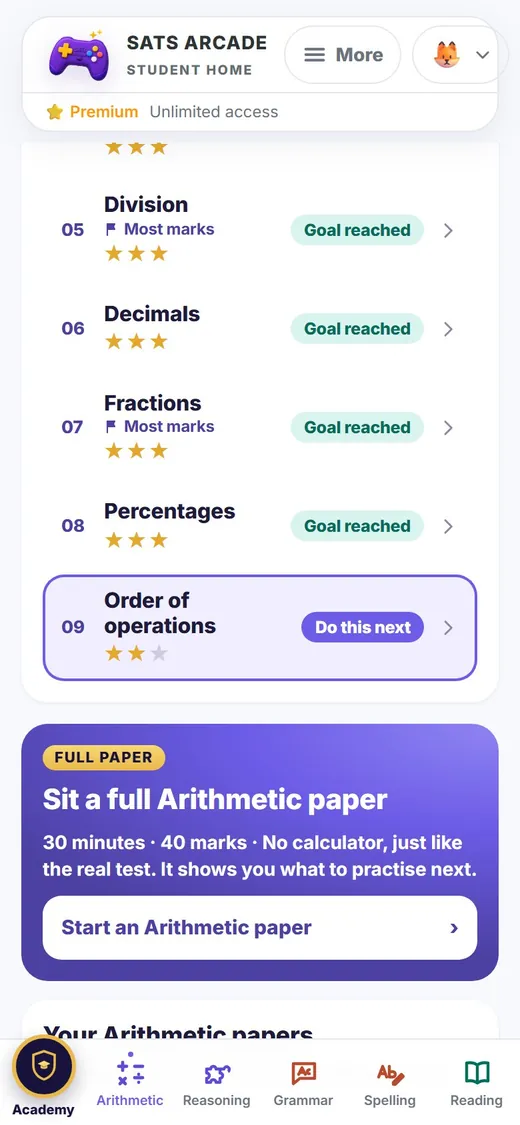
Example progress
Pass the short test at a level and they win its star, so you can both see what's done.
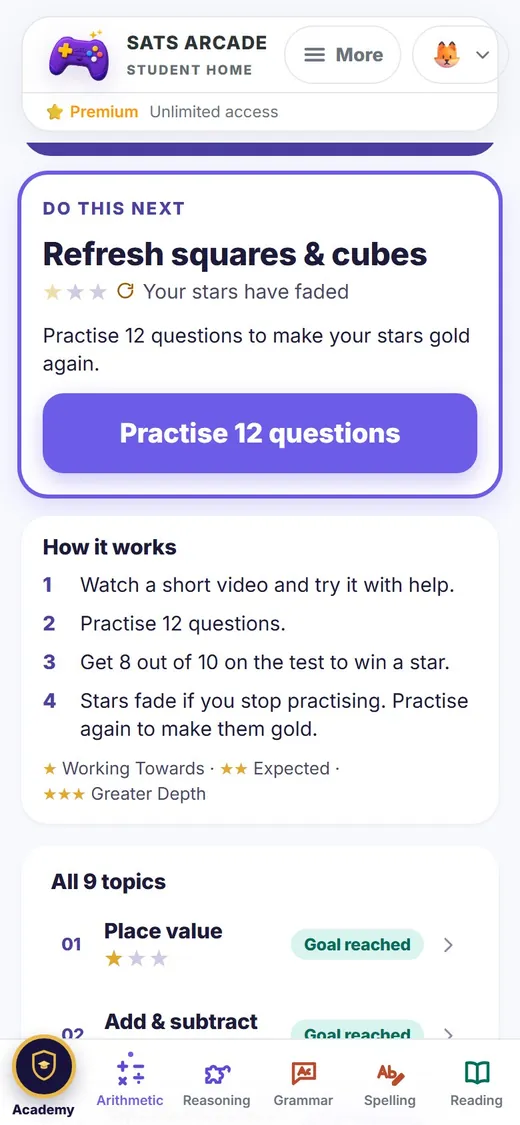
Example progress
Stars fade if a topic isn't practised for a while, so gaps are easy to spot. A quick practice brings them back to gold.
The same skills, followed past 16.
Step 6 · After 16
Grade 4
Students on a 16 to 19 study programme without a grade 4 in English or maths must keep studying it, under a DfE funding rule.
DfE, 16 to 19 maths and English condition of funding 2026 to 2027£63,700
more in lifetime earnings (present value, on average), linked to a big step up in Year 6 English and maths (children who sat Year 6 tests in the late 1990s).
DfE, KS2 attainment and lifetime earnings, 2025£14,500
more in lifetime earnings, on average, linked to one grade higher in GCSE maths (people who took GCSEs around 2001 to 2004).
DfE, GCSE attainment and lifetime earnings, 2021These are links, not guarantees. DfE says the pay link is an association, not proof of cause. "A big step up" is one standard deviation in the DfE study.
Step 7 · A fair point
Perhaps you did. But is that the standard you want to set for your child?
Surviving a difficulty doesn't make the difficulty good for you. And succeeding despite a disadvantage is not evidence the disadvantage didn't matter.
Grades are one way colleges and employers check skills.
Fewer and fewer people in work have no qualifications at all.
Working Futures 2017 to 202756% of UK employers rated GCSE English and maths (A* to C) as critical or significant in 2016.
Adults in England with stronger maths skills were paid more per hour, even when comparing people with the same years of schooling.
Hanushek and others, Returns to skills around the world (NBER). Full-time workers aged 35 to 54, 2011 to 2012. Links, not guarantees.
Step 8 · The goal
The lessons explain the method.
The practice is where they try it themselves.
You see the progress.
Step 9 · Now
You cannot control what questions appear in May. You cannot sit the papers for your child. You cannot guarantee a result.
22 school weeks left before SATs
Be honest
One tap. Nothing is saved.
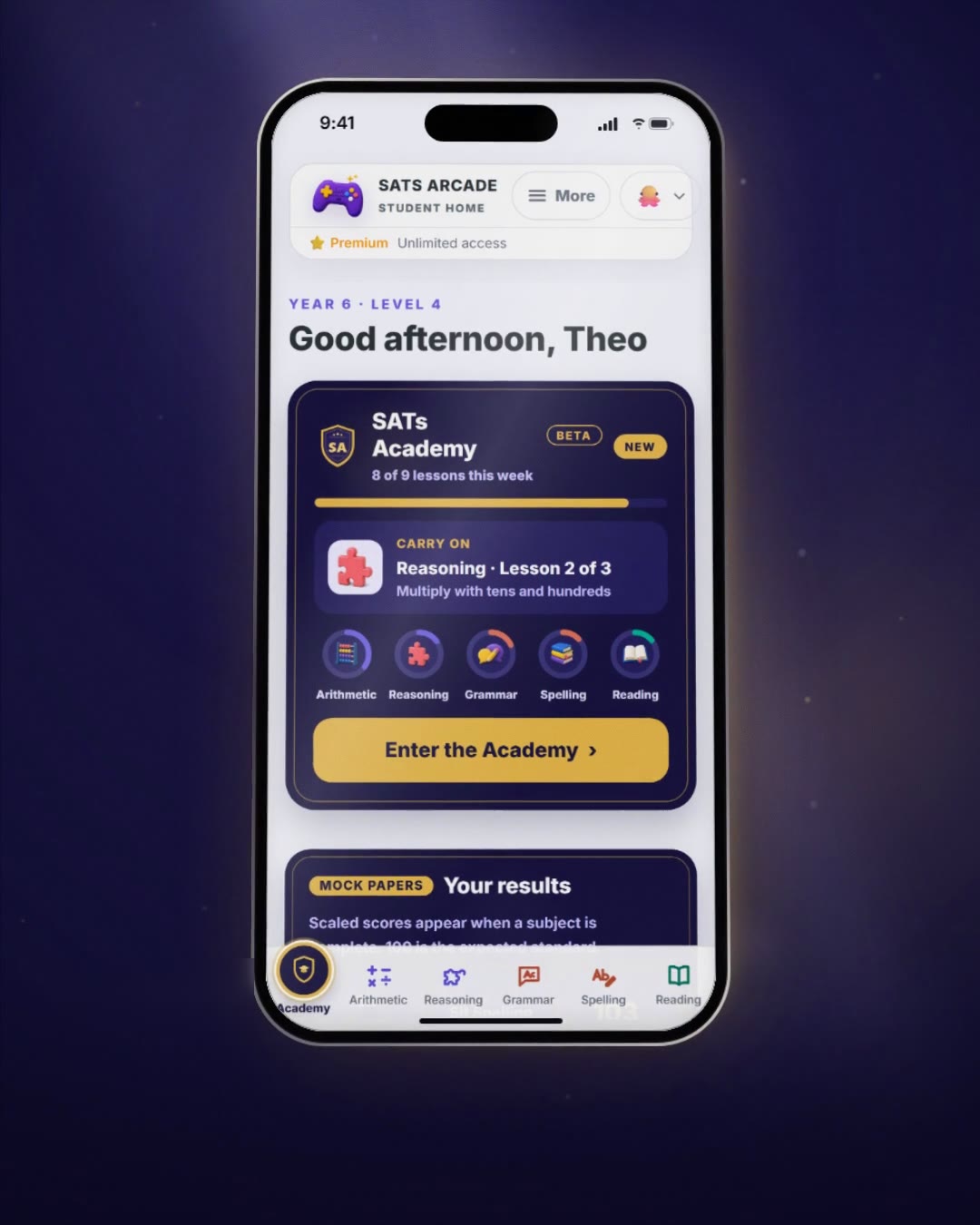
Example progress
1:33
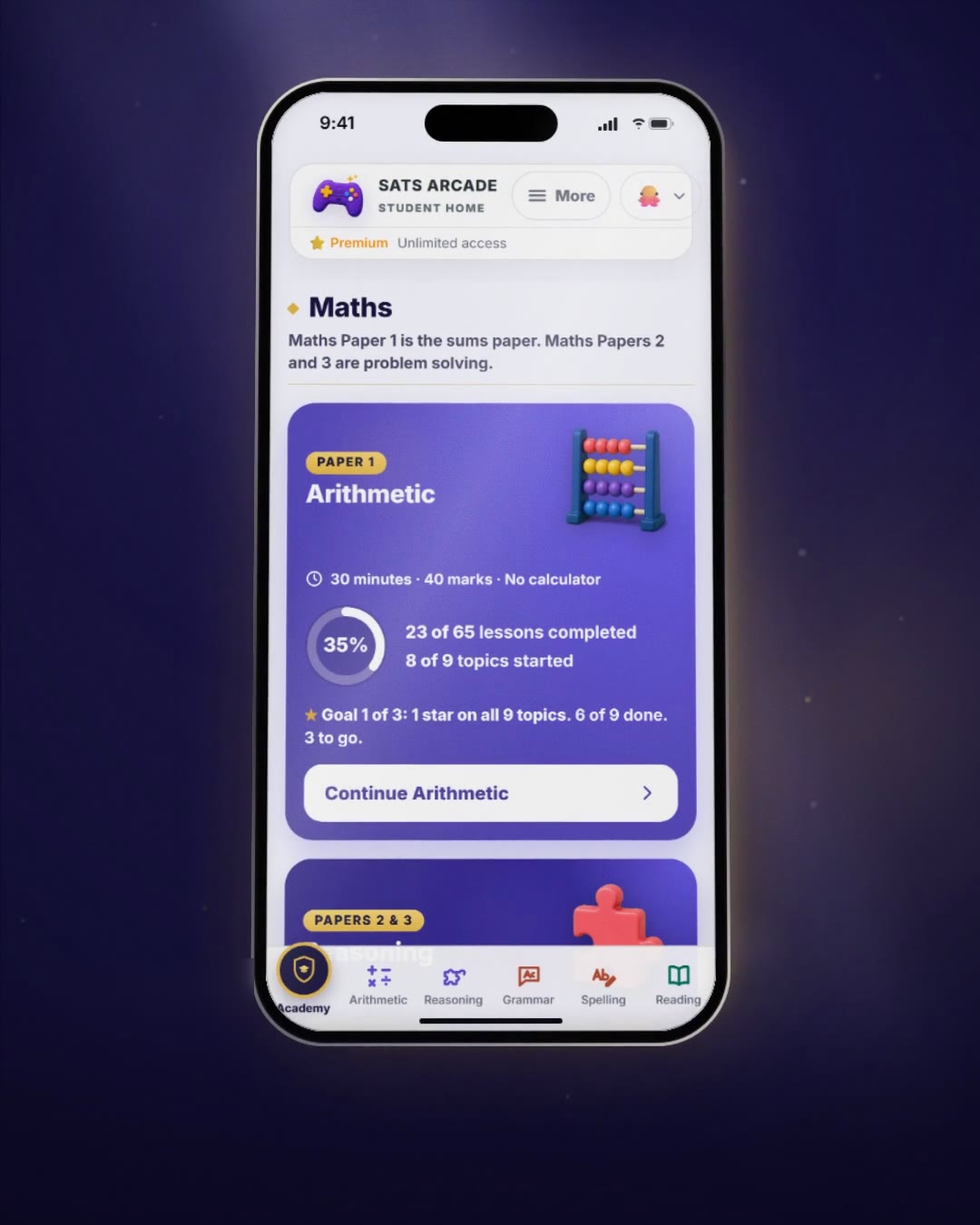
Example progress
1:43
71 full mock papers, sat just like the real test. After they hand one in, it’s reviewed: their marks, what went well and one thing to practise come back to them, and to you.
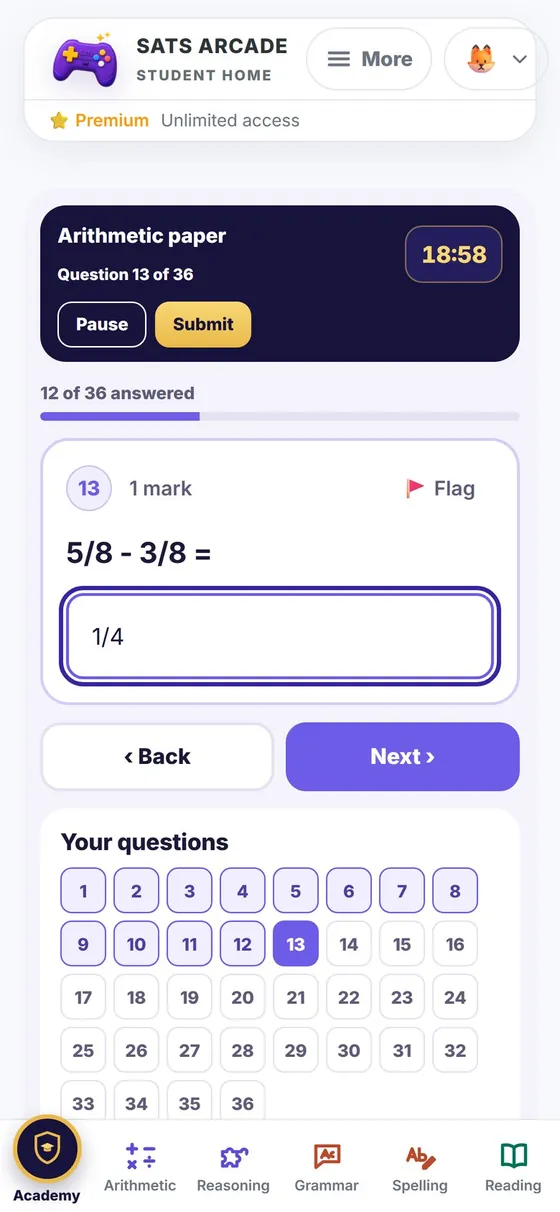
Their marks come back with written feedback in three parts.
Written answers in Reading and grammar are checked against the mark scheme rules, with what earned credit, what was missing and a next step. Maths papers get a full review too.

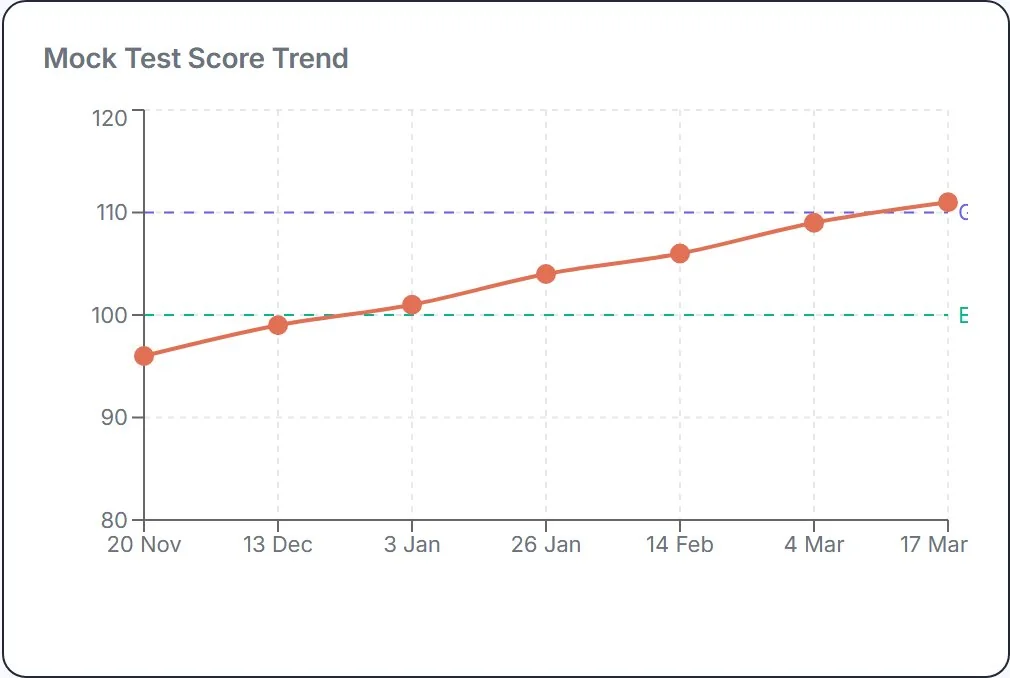
You get an email for each marked paper. Your dashboard keeps a note on each one, their mock history and the mock score trend.
Once every paper in a subject is sat, its marks are converted with the DfE’s published tables. Maths needs Arithmetic and both Reasoning papers, grammar, punctuation and spelling needs both of its papers, and Reading is one paper. It converts mock marks. It doesn’t predict the real result.
110+ A scaled score of 110 or more is the higher standard.
Only about three in ten children reached the higher standard in each test in 2026.
Source: DfE, Key stage 2 attainment 2026 (provisional), pupils reaching the higher standard. More in our guide to how SATs scaled scores work.
Every paper your child sits in May, taught in over 300 voiced lessons, then practised, tested and sat in full.
| Paper | Name | Format | Topics | Mock papers |
|---|---|---|---|---|
| Maths Paper 1 | Arithmetic | 30 minutes, 40 marks | 9 | 12 |
| Maths Papers 2 and 3 | Reasoning | 40 minutes each, 35 marks each | 10 | 23 |
| English Paper 1 | Grammar and punctuation | 45 minutes, 50 marks | 9 | 12 |
| English Paper 2 | Spelling | 20 words read aloud, 20 marks | 15 | 12 |
| English Reading | Reading | 60 minutes, 50 marks | 8 | 12 |
| In all | 51 | 71 |
New to the papers? Read our guides to KS2 maths, reading and grammar, punctuation and spelling, or browse every topic guide.
Each level has its own lesson, practice and test, and its own star.
Builds the basics. The gentle way in if you're not sure where to start.
The standard for the end of Year 6.
Takes them further.
Not in Year 6 yet? Younger children can use SATs Academy too. They just won't see the countdown or weekly plan until Year 6.
SATs Academy has over 300 lessons. Spread across Year 5 and Year 6, that's a few lessons a week, with plenty of time to come back to each topic. The same lessons from a later start means more each week.
Start now in Year 5about 5 lessons a week
Start now in Year 6about 14 lessons a week
An estimate: the same lessons over the school weeks left before SATs, with holidays taken out.
In a UK classroom study, 11 and 12 year olds who spread the same practice over three weeks remembered more a month later than those who did it in one go.
Emeny et al., Applied Cognitive Psychology, 2021.If your child is in Year 6, start now.
Every week you put it off crams more into the weeks that are left.
You don't need to. Every lesson is voiced and shows the method step by step, with captions on. Your child can pause and replay any part.
There's nothing to plan. Their SATs Academy page names the next lesson, so they can start straight away, on a laptop or a phone.
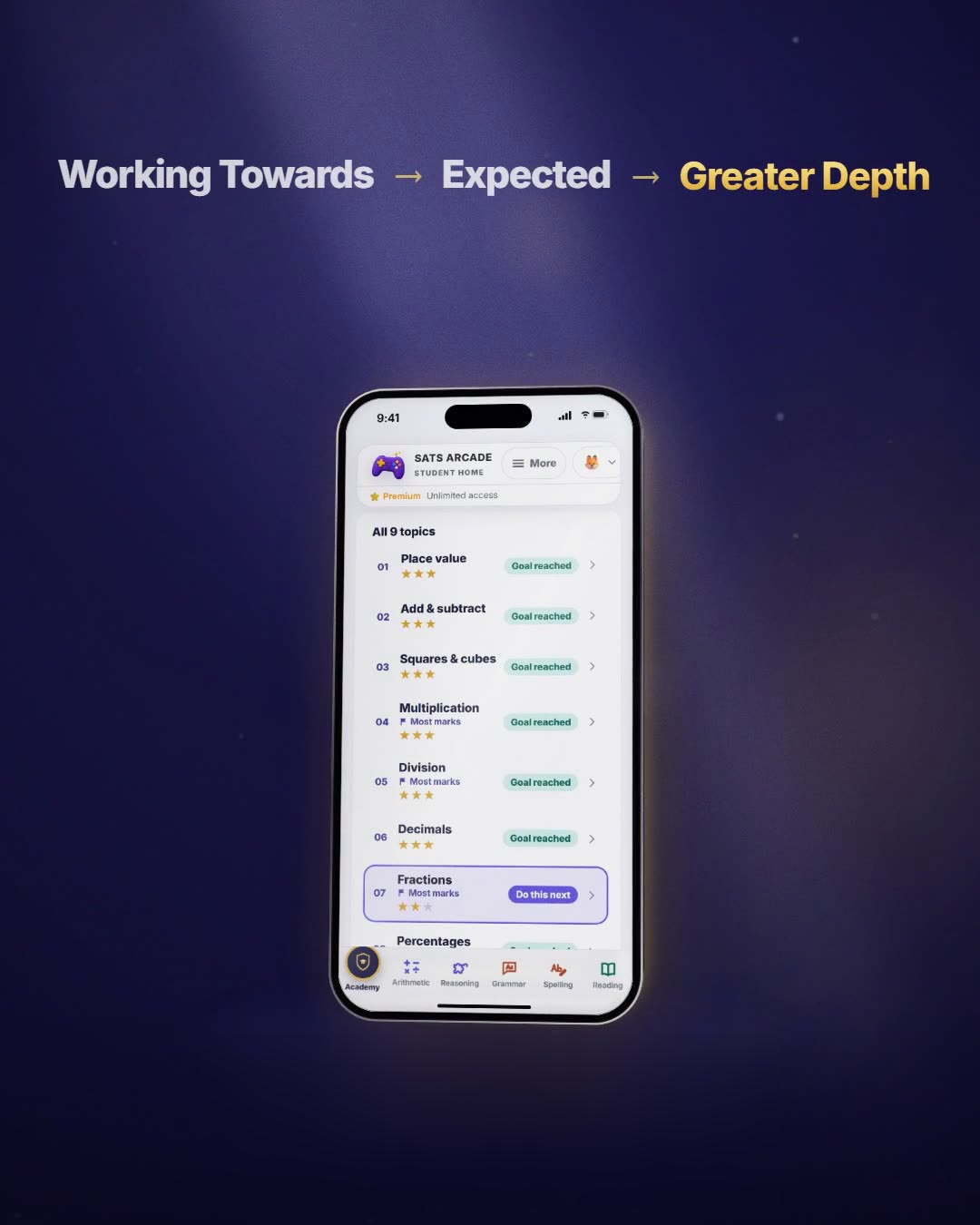
Every topic has three levels. Working Towards is the gentle way in, and Greater Depth takes them further.
Start with a 7-day free trial. Cancel before day 7 and you won't be charged. If a paid plan isn't right, ask us for a full refund within 30 days of signing up, including your 7-day free trial.
No surname, school, date of birth, photo or phone number.
Children cannot contact each other.
There are no adverts anywhere on SATs Arcade.
We’ve sat beside them, too. SATs Arcade is made by Arcade Learning Group Ltd, company 17441494. Our story
SATs Academy is included in Standard and Family. Both start with a 7-day free trial. Cancel before day 7 and you won't be charged.
For one child
£39a month
or £390 a year, which saves £78
7-day free trial. Cancel before day 7 and you won't be charged.
For up to four children
£49a month
or £490 a year, which saves £98
7-day free trial. Cancel before day 7 and you won't be charged.
30-day money-back guarantee. If a paid plan isn't right for your family, contact us for a full refund within 30 days of signing up, including your 7-day free trial. Cancel any time from Settings, then Plan & billing, and keep access until the end of the period you've paid for.
Anything else? Get in touch or email info@satsarcade.co.uk.
Planning ahead? Read how to practise for SATs at home and what to expect in SATs week.
SATs Academy is the lesson-led part of SATs Arcade. It teaches all five KS2 SATs papers (Arithmetic, Reasoning, Grammar and punctuation, Spelling and Reading) in over 300 voiced lessons across 51 topics, each at three levels, with practice, a short test for every level and 71 full mock papers.
Standard (£39 a month or £390 a year, for one child) and Family (£49 a month or £490 a year, for up to four children). Both start with a 7-day free trial. Cancel before day 7 and you won't be charged.
Every topic comes in three levels: Working Towards (one star), Expected (two stars) and Greater Depth (three stars). If you're not sure, start at Working Towards. It's the gentle way in. When they pass its test, move up to Expected.
SATs Academy teaches the Year 6 SATs papers. Younger children can use it too. They just won't see the countdown or weekly plan until Year 6.
It depends on when you start. For a Year 6 child, the weekly plan spreads the lessons still to watch evenly over the weeks left until SATs week, so the sooner you start, the fewer lessons each week. Each lesson opens with a few minutes of explanation, then untimed practice.
It is screen time with a job to do. Each lesson is short and voiced, with captions, then comes practice on just that topic and a short test that wins a star when they pass. You can sit beside them while the lesson does the explaining.
Sit beside them. The lesson does the explaining, step by step, with captions on, and your child can pause and replay any part. You don't need to know the method yourself. Their SATs Academy page names the next lesson, so there's nothing to plan.
Yes, any time, from Settings, then Plan & billing. You won't be charged during the 7-day trial. If you don't cancel before day 7, your card is charged when the trial ends and your plan starts. You keep access until the end of the period you've paid for. If a paid plan isn't right for your family, contact us for a full refund within 30 days of signing up, including your 7-day free trial.
We store a child's first name, year group, answers and scores. We do not ask for their surname, school, date of birth, photo, location or phone number. Children cannot contact each other and there are no adverts.
The games, leagues and daily challenges now have their own page, The Arcade. Standard and Family have no daily limit on games.
One third is two sixths. Now the parts match, so add the tops. That's a real lesson from SATs Academy. And progress is tracked every step of the way: from Working Towards, through the expected standard, to Greater Depth, with a ring for every paper and mock scores you can watch climb. SATs Academy covers all five SATs papers: fifty-one topics, each at three levels.
Nobody can be expected to teach all of that, so every topic is taught for you, step by step. Helping with SATs sounds simple, until you sit down together and realise you don't know where to start, or which topics they're stuck on. After a long day there's tea to make, the others need you too, and attention is in short supply, theirs and yours. And when you do sit down, practice turns into an argument. There's more to SATs than you thought, and you start looking for help.
Here's how SATs Academy turns that into progress you can see, in four steps. Watch. An interactive voiced lesson shows them how so the explaining isn't down to you. Practise. Questions on just that topic, so they do it themselves.
Test. Every topic has three levels. Working Towards builds the basics. Expected is the standard for the end of Year 6. Greater Depth takes them further.
Pass the short test at a level and they win its star, so you can both see what's done. Refresh. A full set of stars isn't the finish line. If a topic isn't practised for a while, its stars fade, so gaps are easy to spot. A quick practice brings them back to gold.
Then full mock papers, just like the real thing, give each subject a score. Scores run from eighty to a hundred and twenty. A hundred is the expected standard. A hundred and ten or more is the higher standard, and only about three in ten children reach it in each test. And there's no guessing what's next, because the next lesson is already waiting.
Or they can pick any topic they like, and the stars show at a glance where they stand. Let the lesson explain. You just sit beside them, and helping becomes something you can both enjoy. It matters, because their results go with them to secondary school, and so does the confidence they walk in with. So aim high, and start early.
Spread across Year 5 and Year 6, it's just a few lessons a week, with plenty of time to come back to each topic again and again. And research with UK children found that spreading the same practice over weeks helps them remember more. If your child is in Year 6, start now, because every week you put it off crams more into the weeks that are left. So that in May, they walk in calm and confident. And it works on a laptop or a phone, so it fits wherever you sit down together.
May won't move. You can. Join SATs Academy tonight. Make your account, add your child's first name and year, and SATs Academy is right there on their home screen.
There are 22 weeks left at school before SATs 2027.
Join SATs Arcade tonight. It takes three steps.
Your email and a password, or sign up with Google.
Just their first name and year.
SATs Academy is right there on their home screen.
7-day free trial. Cancel before day 7 and you won't be charged. Money-back: a full refund within 30 days of signing up, including your 7-day free trial.